

How We Transported a 150 MT Cantilever Extend Deck of a Jackup Barge
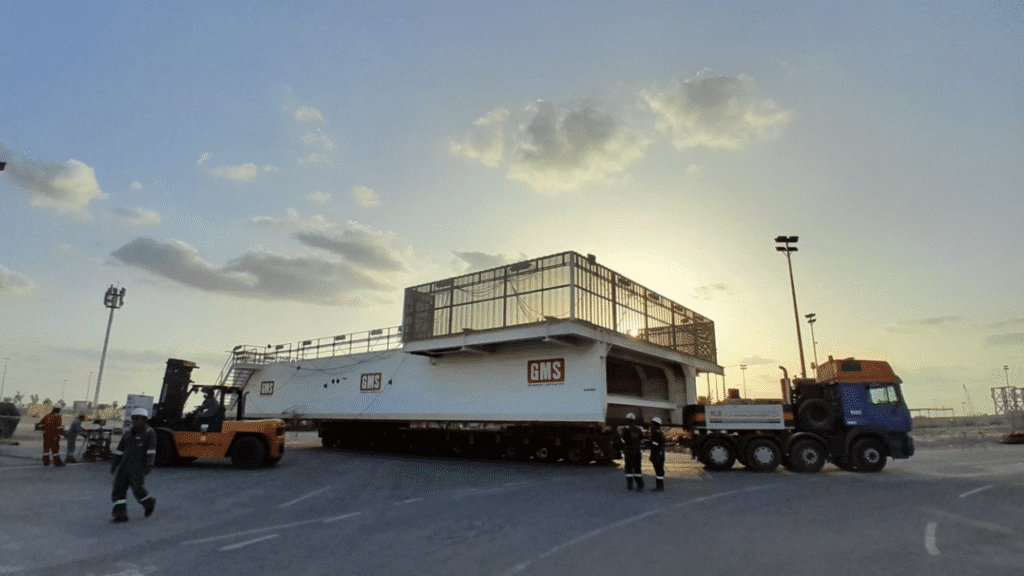
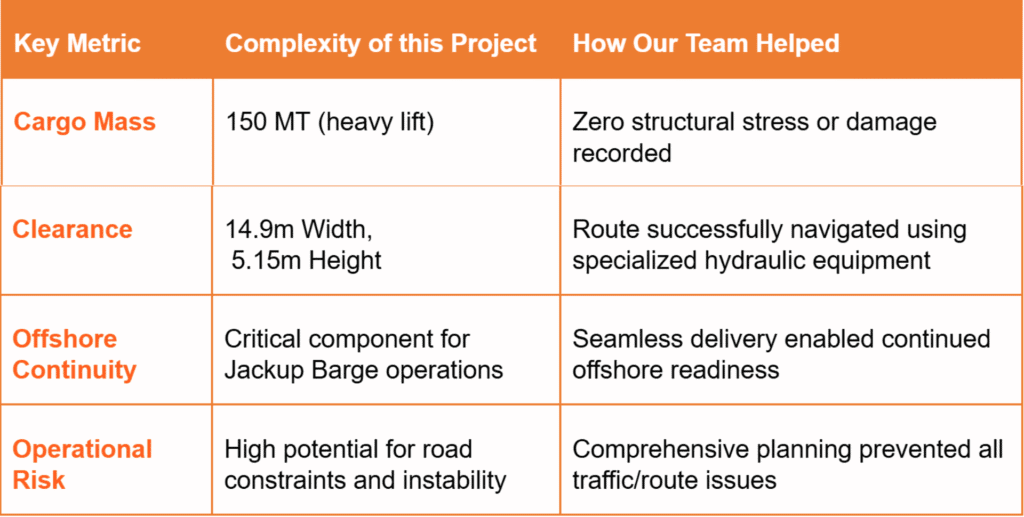
This project details the highly specialized logistics required for the successful transport of a 150 Metric Ton Cantilever Extend Deck, a massive component critical to offshore Jackup Barge operations. Handling cargo with a 14.9-meter width and 5.15-meter height necessitates advanced engineering and hydraulic modular equipment to navigate road constraints.
Why does moving a 150-ton Jackup Barge deck demand expertise?
The move from the Jebel Ali Industrial Area to Al Jaddaf was classified as a ODC project due to the sheer size and weight of the catamaran. This required specialized logistics planning to navigate urban infrastructure safely and without incident.

Key Cargo Dimensions
- Length: 28,500 mm (28.5 meters)
- Width: 14,900 mm (14.9 meters)
- Height: 5,150 mm (5.15 meters)
What specialized equipment ensured safe transport of the 150 MT structure?
Due to the immense weight and width of the offshore deck, standard trailers could not be used. The margin for error on weight distribution and stability was near zero to prevent structural stress and failure during the movement.
We deployed Hydraulic Modular Trailers capable of handling the 150 MT load while offering exceptional precision in manoeuvrability and load distribution. This specialized equipment was essential for mitigating structural stress and successfully navigating road constraints caused by the 14.9m width.
Key operational solutions that we provided:
- Weight Distribution: Our engineering team performed complex calculations to ensure the 150 MT load was spread evenly across the modular trailer axles, protecting the asset and public infrastructure.
- Specialized Route Planning: The route was meticulously planned, accounting for limited clearance areas and specific road constraints that the 14.9m width imposed, confirming the feasibility of the transit.
How frequently do Jackup Barge components move within the GCC region?
The GCC is a key global hub for offshore oil and gas and maritime activities, meaning the movement of Jackup Barge components and equipment is a recurring logistical demand.
Jackup Barge and offshore asset movements in the GCC occur frequently, often every few months, driven by the dynamic energy and maritime sectors. These relocations are essential for maintenance, new drilling projects, and offshore construction.
GCC Jackup Barge Movement Drivers:
- Oil & Gas Exploration: Major oilfields in the UAE, Saudi Arabia, Qatar, and Kuwait require constant repositioning of Jackup barges for drilling and well intervention.
- Offshore Construction: Jackup barges are regularly used for building artificial islands, offshore terminals, and port expansions (e.g., in Dubai and Oman).
- Maintenance Cycles: Platform refurbishment and maintenance typically necessitate relocating barges to dry docks or offshore facilities following annual or biennial schedules.
What key logistical challenges were overcome?
The success of moving critical offshore infrastructure is measured by the flawless integration of engineering, specialized equipment, and execution, ensuring the high-value asset arrived safely and without incident.
This successful execution of ODC transport, particularly the complex regulatory navigation and engineering required in Dubai’s high-traffic urban core, is underpinned by Three Line Shipping’s extensive background. We draw on over 20 years of specialized experience in heavy lift and project logistics, ensuring that even the most technically demanding and high-value cargo movements are handled with proven operational excellence and deep regulatory knowledge.
Frequently Asked Questions on ODC Logistics
1. What is a Cantilever Extend Deck and why is it essential for Jackup Barges?
A Cantilever Extend Deck is a large, extendable structure on a Jackup Barge that allows the drilling unit or platform to be positioned over an existing fixed offshore platform. This extended reach is crucial for efficient drilling, maintenance, and well intervention in the offshore oil and gas sector.
2. Why is Police and RTA coordination so important for ODC in Dubai?
A width of nearly 15 meters requires a rigorous route survey because the cargo far exceeds standard road lane width. This necessitates temporary removal or modification of street furniture, traffic lights, and sometimes power lines, making every kilometre of the route a specialized engineering exercise to ensure clearance.
3. How are Jackup Barges themselves typically moved in the GCC region?
For short distances, Jackup Barges are usually towed by powerful tugboats or, if self-propelled, moved under their own power. For longer, international routes (e.g., between the UAE, Saudi Arabia, and Qatar), specialized heavy lift vessels are often employed for safer and more efficient transport.