

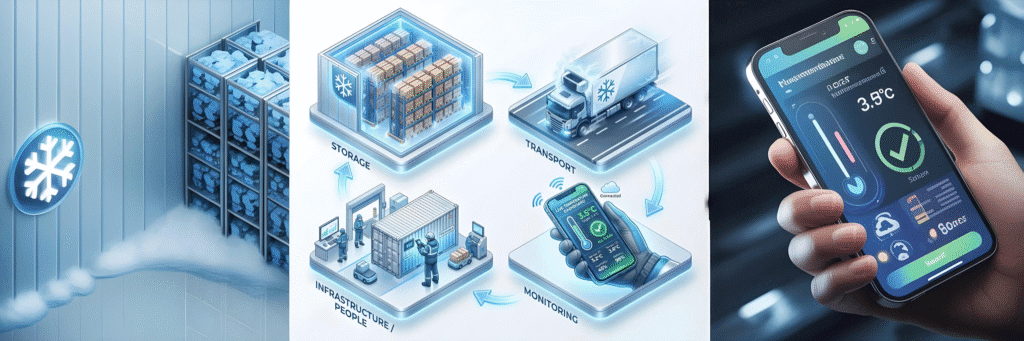
Here are the 4 components that ensure safety and quality from the farm to your fork.
Keeping goods safe in storage
The first part is keeping goods at the right temperature in storage. These are special warehouses and centers where goods wait before moving to their next stop.
Unlike normal storage sheds these places are built with specific zones.
These facilities often use machines called blast chillers. These cool products down very fast right after they are made to lock in the quality.
Moving goods on the road and sea
If storage is the foundation then refrigerated transport is the lifeline. This covers moving goods between places using special vehicles. We call these reefers when they are trucks or ocean containers.
The history of this goes back to 1938 when Frederick Jones invented the first portable cooling unit for trucks. Today it is a high-tech operation. Modern reefers are built to stay stable despite the weather outside. A truck driving through a hot desert can keep its cargo at an arctic chill inside.
Watching the temperature in real time
In the past, logistics managers had to trust that the temperature stayed constant. Today they know for sure. Real-time monitoring is the biggest modern change to the cold chain.
Freight forwarders use IoT sensors and GPS to track the heat and humidity of a shipment every second. This visibility helps in three ways.
The physical tools and the people
The final component is the cold chain infrastructure. This includes physical things like ports and roads. It also includes the people who do the work.
Bad roads or a lack of power at a port can break the entire chain. Experienced freight forwarders use smart packaging to bridge these gaps. Shipping companies use Phase Change Materials which are smart substances that absorb heat to keep temperatures stable.
Training the workforce is just as important. Drivers and warehouse staff must know the rules of Good Distribution Practice. They need to know how to handle sensitive cargo correctly.
The challenge of being green
The cold chain is vital for global health but it faces a challenge. It uses a lot of energy. The industry is changing fast to fix this. We are seeing more electric vehicles and cleaner cooling systems. This reduces our impact on the planet without risking product safety.
We hold the chain together for you
Understanding these components shows that it is about more than just keeping things cold. It is about precision and following strict rules and regulations. Every link in the cold chain must hold strong.
At Three Lines Shipping we understand the stakes. Whether you are moving sensitive materials or perfume, our solutions are built on these four pillars. We provide the infrastructure and the team to ensure your products arrive exactly as intended. Contact us today to secure your cold supply chain.