

The global maritime industry is currently experiencing periods of intermittent operational friction across traditional shipping routes. Because of these temporary shifts, the Red Sea has solidified its position as a vital and stabilizing artery for global commerce. At the very center of this maritime network is Jeddah Port. This massive facility is now the premier conduit for global imports arriving from Europe and moving to anywhere in the Middle East. It also serves as the primary gateway for regional exports heading to Europe, the Americas and Asia. To navigate this new logistical paradigm, modern supply chains require absolute multimodal resilience. End to end freight forwarders seamlessly integrate deep water access at this port with advanced road transportation networks. This guide explores how businesses can leverage this massive Saudi Arabian facility to ensure uninterrupted cargo flow across the entire region.
Understanding The Massive Scale Of The Premier Red Sea Gateway
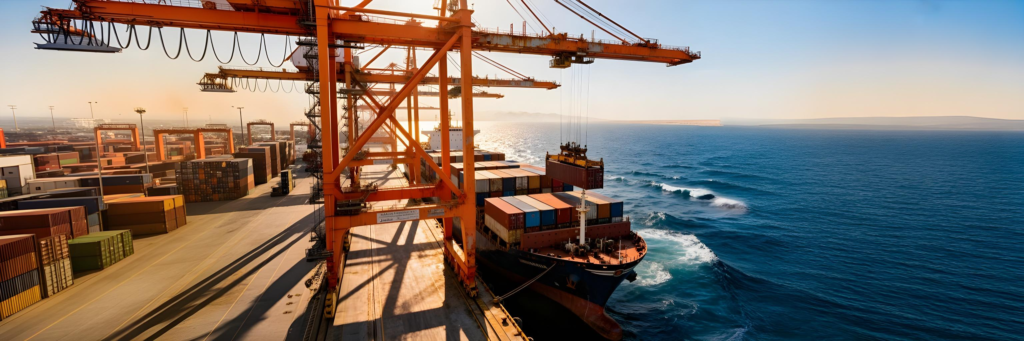
Jeddah Islamic Port operates as the most important maritime facility in the Kingdom of Saudi Arabia. The sheer size and capacity of this Jeddah sea port are truly staggering. The facility spans an incredible 12.5 square km along the strategic Red Sea coast. It features 62 multipurpose deep-water berths with depths reaching up to 18 m. This incredible depth allows the port to easily accommodate the largest ultra large container vessels in the world. These massive ships can carry up to 19,800 20-feet equivalent units of cargo at a single time.
The port currently processes 75% of the total maritime trade for the country and handles 65% of all seaborne imports. With an annual throughput of over 130 million tonnes of cargo it acts as a massive industrial complex driving the regional economy. When filling out international shipping documents, logistics operations executives must always use the correct Jeddah port code which is SAJED to guarantee perfect routing accuracy.
Connecting Global Imports From Europe To Anywhere In The Middle East
Global businesses are rapidly changing their shipping strategies to rely on the Red Sea corridor. They now leverage this specific port as their primary distribution hub for European imports entering the Middle East. Redirected global trade flows have recently boosted cargo volumes at the facility by an estimated 40%. To handle this massive volume surge, international shipping carriers have introduced new direct shipping lines.
These high frequency maritime links provide rapid connections between major European industrial centers and the Arabian Peninsula. When commercial goods arrive from Europe they do not just stay in Saudi Arabia. Instead, they are quickly unloaded and distributed through land to neighboring countries like UAE, Bahrain, Qatar, Kuwait and Oman. Expert freight forwarders and sea freight teams specialize in managing these complex import flows. They ensure that European retail goods and industrial supplies reach their final destination markets without any unnecessary delays.
Facilitating Massive Export Volumes to the Americas And Asia
The Jeddah Port facility is equally important for regional manufacturers looking to sell their products on the global stage. It serves as a highly efficient launchpad for global exports heading to the Americas and the massive consumer markets in Asia. Shippers can load their outbound containers onto direct vessels that bypass congested alternative routes entirely.
This direct connectivity drastically reduces total transit times for outbound ocean freight. Whether a factory is exporting petrochemicals to the United States or manufactured goods to China, this deep water facility provides the necessary maritime capacity. Utilizing this port for export operations allows regional businesses to remain highly competitive in the fast-paced global economy.
Injecting Billions Of Dollars Into Terminal Modernization Projects
To keep up with the incredible demand from global shippers, the Jeddah Islamic Port authority is executing a massive capital expansion plan. Through specialized build operate transfer agreements, international terminal management companies are injecting billions of dollars into the facility. The South Container Terminal is currently undergoing an $800 million modernization project. This massive upgrade will double its handling capacity from 1.8 million to 4 million containers annually.
The project also extends the total quay length to 2,150 m and fully automates the massive gantry cranes. Furthermore, the terminal is upgrading its refrigerated infrastructure from 1,200 to 2,340 active reefer plugs. These new plugs are absolutely essential for supporting the highly sensitive pharmaceutical cold chain. On the other side of the facility, the Red Sea Gateway Terminal is receiving a $1.7 billion investment. This capital injection targets a massive 8 million container capacity and equips the terminal with 24 super post panamax cranes.
Integrating Alternative Coastal Ports For Total Multimodal Resilience
Relying exclusively on a single maritime chokepoint is no longer a viable strategy for modern corporate supply chains. Savvy shipping companies must build redundancy into their networks by utilizing multiple deep-water gateways. Top freight forwarders offer incredible flexibility by integrating operations across several strategic regional facilities.
While the main hub handles the bulk of the Red Sea traffic, businesses can also utilize King Abdullah Port for additional western coast capacity. For cargo entering from the eastern side, freight forwarders should ensure freight can be picked up from Sohar Port in Oman and distributed to anywhere in the Middle East. Logistics companies also offer rapid extraction services where cargo can be picked up from Fujairah Port on the eastern coast of the UAE. This flexible multimodal approach guarantees that commercial goods will always find a safe and efficient path to market.
Relying Strictly On Official Intelligence For Safe Regional Navigation
Navigating current periods of regional volatility requires absolute discipline and access to verified facts. The internet is frequently flooded with unverified rumours and panic driven social media posts regarding maritime security. Freight forwarders must ignore these dangerous rumours and rely strictly on official government channels for real time safety and operational directives.
To ensure the safety of cargo and truck drivers must follow the official accounts cited by the UAE government. You should follow the Ministry of Interior on Instagram at @moiuae for all national security updates. You must monitor the National Emergency Crisis and Disaster Management Authority at @ncemaue for official crisis management protocols and weather alerts. For verified daily news updates you must follow the Emirates News Agency at @wamnews and their English version at @wamnewsen. Finally, the official Instagram account of the Government of Dubai Media Office at @dubaimediaoffice provides essential local announcements.
Extracting Cargo Quickly Using Bonded Trucking And Road Transportation
When sea freight arrives at the port, the journey is only half complete. Smart supply chain managers capitalize on the advanced port infrastructure by orchestrating the immediate extraction of their cargo. They utilize highly secure bonded trucking to move goods across international borders without triggering immediate customs taxation.
For example, utilizing freezone to freezone bonded transit for a high value shipment can defer the immediate 5% customs duties and VAT. This smart financial strategy preserves tens of thousands of Dirhams in corporate working capital. If a business has enough cargo to fill an entire trailer, full truckload services (FTL) provide a dedicated heavy transport vehicle. If someone is shipping a smaller volume of shipments then less than truckload (LTL) consolidation services allow them to share the trailer space and split the fuel costs with other trusted clients.
Executing Flawless Project Cargo Engineering For Heavy Industrial Machinery
The massive economic transformation happening across the region requires an incredible amount of heavy industrial equipment. Handling this massive machinery requires highly specialized project cargo engineering skills. For the heavy equipment driving major regional initiatives, freight forwarders execute meticulous port feasibility studies long before the ship arrives.
They deploy advanced multi axle modular trailers to synchronize the ship-to-shore transfers perfectly. This level of precise engineering is necessary to safely lift and transport oversized industrial equipment. By removing these massive shipments from the port grounds immediately, freight forwarders help their clients avoid excessive and highly expensive port storage fees.
Securing Your Future Supply Chain With Our Expert Logistics Team
The global shipping industry will continue to evolve and your business needs a freight forwarding partner who can adapt to any situation. At Three Lines Shipping we possess the physical assets and the deep technical expertise required to manage your most complex international shipments. We understand exactly how to leverage the massive expansion projects at these deep-water facilities to your commercial advantage. We handle the documentation and coordinate the road transportation so you can focus entirely on growing your core business.
Do not let temporary maritime disruptions slow down your corporate growth or damage your valuable inventory. You can trust our highly experienced team to build a resilient and incredibly cost-effective sea-to-road and road-to-sea transport route for your global imports and exports. Fill out our quote form now to learn exactly how we can optimize your regional supply chain. As an end to end logistics provider, we offer all services to you in-house.