

Abu Dhabi to Jebel Ali | How we transported 89-ton Gas Flotation Units across the UAE
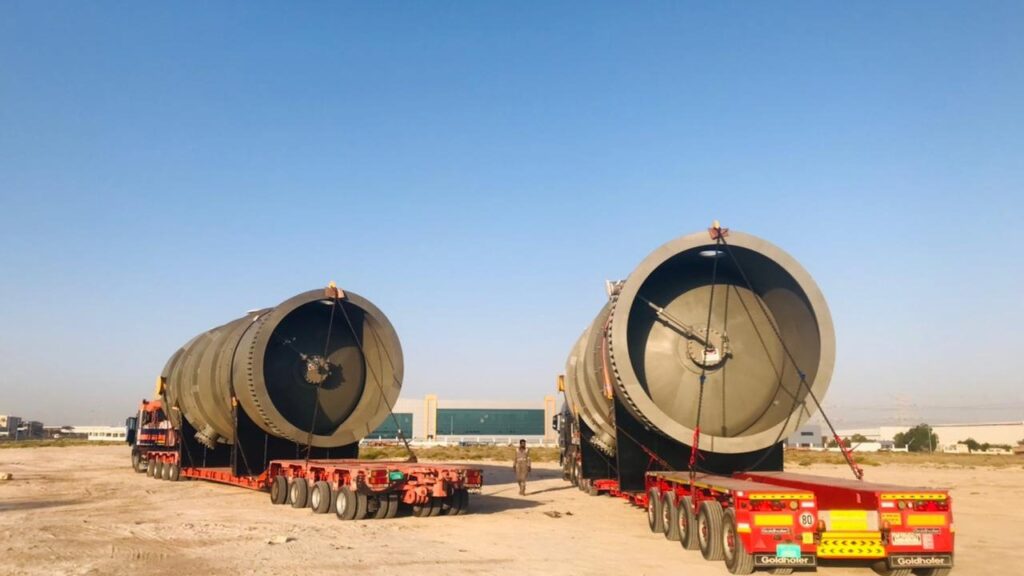
This project outlines a critical Over-Dimensional Cargo (ODC) transfer of Gas Flotation Units from Abu Dhabi to Jebel Ali Port, a short-haul movement defined by extreme weight (89 tons) and height (5.2 meters). Successful transit relied entirely on specialized low-profile hydraulic equipment and pre-emptive coordination with UAE road authorities to manage severe clearance restrictions.
What specialized issues arise when moving 89-ton energy equipment across the UAE?
Moving heavy machinery essential to oil and gas operations (such as Gas Flotation Units) in a high-traffic, regulated environment creates an acute logistical challenge, particularly when the cargo exceeds standard road dimensions.
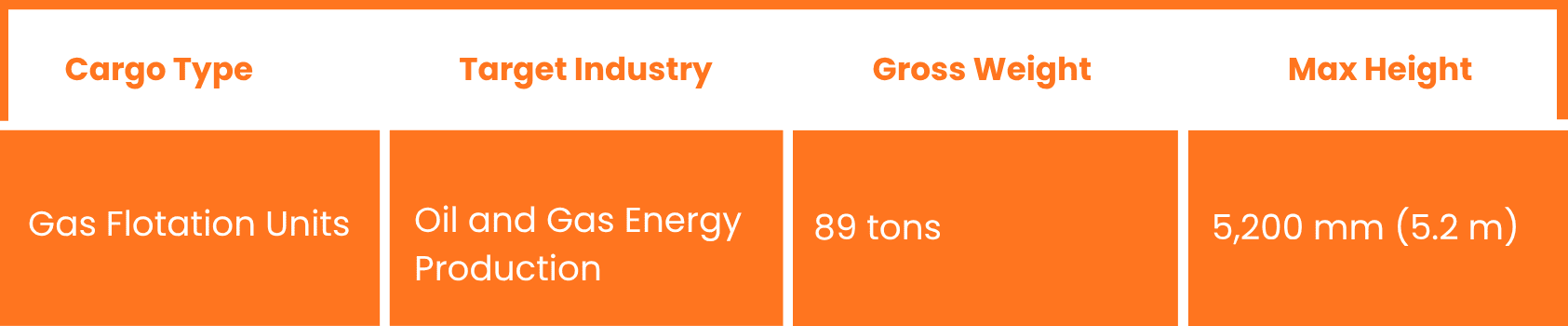
Key Cargo Specifications
- Length: 22,000 mm (22 meters)
- Width: 5,800 mm (5.8 meters)
- Height: 5,200 mm (5.2 meters)
How did specialized trailers overcome extreme height and clearance obstacles?
The sheer height (5.2m) of the unit presented significant risks related to overhead infrastructure, necessitating a technical solution focused on minimizing vertical profile while maintaining stability.
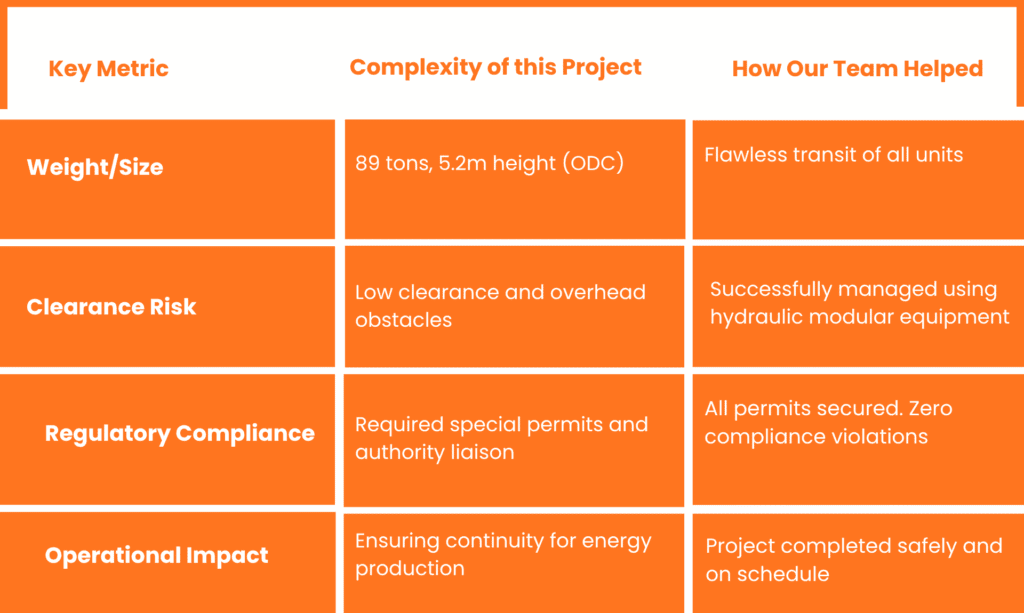
We deployed Low-Profile Hydraulic Modular Trailers specifically designed to reduce the overall height of the load carriage. This highly specialized equipment was crucial to manoeuvre the 89-ton unit safely under low clearance structures and overhead obstacles along the optimized route, ensuring continuity for energy production assets.
Key operational solutions that our team provided:
- Low-Profile Deployment: Utilizing modular trailers provided the necessary height reduction to navigate tight spaces without compromising structural integrity or weight distribution.
- Cargo Stability: Precise load calculations were performed by our engineering team to ensure ideal stability and prevent axle overload, which is critical when handling 89 tons of high-value machinery.
What permits and strategic planning ensured seamless transit?
In the UAE, the movement of cargo this size (5.8m wide, 5.2m high) requires extensive regulatory navigation to ensure safety and prevent major road disruption. This level of foresight is a crucial element of project logistics expertise.
Comprehensive regulatory compliance and proactive route optimization were mandatory for this short-haul ODC move. We secured all necessary special permits and coordinated closely with local authorities to ensure a seamless transit without delays or incidents.
The compliance process included:
- Route Surveys: Conducting extensive site surveys and detailed route planning to identify and mitigate all overhead and lateral obstacles.
- Permit Acquisition: Managing the complex administrative process of securing official approvals required for the oversized transport.
- Authority Coordination: Working directly with relevant road and port authorities to guarantee the smooth, safe, and regulated movement of the critical energy units.
What were the measurable results of this Mega Move?
The successful delivery of this high-value asset is measured by the flawless execution of a technically challenging move, full regulatory adherence, and zero operational incidents
This successful execution of ODC transport, particularly the complex regulatory navigation and engineering required in Dubai’s high-traffic urban core, is underpinned by Three Line Shipping’s extensive background. We draw on over 20 years of specialized experience in heavy lift and project logistics, ensuring that even the most technically demanding and high-value cargo movements are handled with proven operational excellence and deep regulatory knowledge.
Frequently Asked Questions (FAQ) on Project Logistics
1. What are Gas Flotation Units and why are they classified as critical cargo?
Gas Flotation Units are large, specialized pieces of equipment used extensively in the oil and gas industry to efficiently separate oil, water, and gas during processing. Their transport is classified as critical because their timely delivery is essential to maintaining smooth energy production operations.
2. What is the benefit of using Low-Profile Hydraulic Modular Trailers for ODC?
Low-Profile Hydraulic Modular Trailers are essential for maximizing safe transit clearance. They feature independent height adjustment and axle steering, which allows the total carrying height to be lowered significantly, enabling the cargo to pass safely under bridges or power lines with minimal margin.
3. Why are precise load calculations essential for 89-ton transport?
Precise load calculations are vital to ensure that the weight of the 89-ton cargo is distributed correctly across the trailer axles and road infrastructure. This prevents axle overload, structural damage to roads, and maintains the stability required for safe transport of large, heavy cargo.