

The logistics world around Dubai Airport and Al Maktoum International Airport is going through a temporary reduction in flight operations. This time is defined by unique security events and strict regulations. Supply chain managers are facing huge challenges as they try to keep global trade moving smoothly. Temporary airspace pauses have limited traditional air freight capacity.
To keep the supply chain running amid temporary flight disruptions businesses must pivot to flexible ground transport solutions. Logistics professionals must completely rethink their daily operations to adapt to this new environment. Businesses that adapt quickly will continue to serve their customers while slower companies will face delays and financial impacts. This guide will explain the current regulations and how surface transportation can protect your delivery schedule.
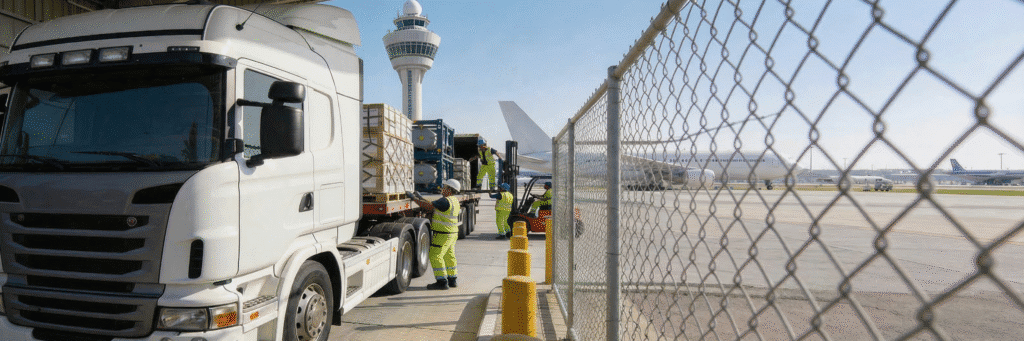
How Temporary Flight Disruptions Impact Global Air Freight Capacity
Logistics planners and individual consumers are constantly checking their Dubai airport flight status to understand the current situation. Recent regional events have triggered temporary flight holding patterns and capacity adjustments by international passenger airlines. When international groups experience temporary suspensions, they can leave freight waiting on the runway.
However local carriers maintain their revised schedules to keep the country connected to the world. This creates a very difficult puzzle for freight forwarders to solve. Passenger airplanes usually carry a massive amount of commercial cargo underneath the passenger cabin. When these international flights face temporary pauses, the market loses a huge amount of cargo space. This restriction makes it incredibly difficult to secure space for urgent medical supplies or electronic commerce goods.
The Incredible Success Of Regional Air Defense Systems
Despite the temporary flight schedule changes the actual airport infrastructure remains entirely secure. United Arab Emirates Air Defense Systems have demonstrated an incredible ninety four percent interception success rate against regional threats. Security forces successfully intercepted 1385 out of 1475 detected anomalies in the sky. Furthermore 172 out of 186 ballistic threats were safely handled before they could reach any populated areas.
This incredible data validates the absolute safety of the airspace and the strength of the local aviation infrastructure in UAE. The temporary flight holding patterns are simply a precautionary safety measure to ensure absolute protection for all civilian passengers and commercial cargo crews.
The Temporary Freeze On Commercial Drone Operations
To ensure the skies remain clear for defense systems, the government took immediate and decisive action. The General Civil Aviation Authority issued a safety decision which temporarily paused unmanned aircraft systems across the country. This safety measure was put in place to prevent any defense radar confusion during this highly sensitive period.
The defense computers need a completely clear picture of the sky to identify real threats quickly. Small recreational and commercial drones clutter the radar screens and make this vital job much more difficult. Therefore, the aviation authority placed unmanned aerial vehicles on standby without any exceptions for hobbyists or corporate operators.
How The Drone Pause Shifts Delivery Networks And Corporate Insurance
Because of this strict new rule, the advanced drone delivery networks across the city have been temporarily paused. Companies holding special licenses for flying drones for delivery are now waiting for the skies to clear. Flying any drones in defiance of these strict commercial drone regulations immediately voids your corporate liability insurance.
Furthermore, operating a drone illegally triggers special contract clauses that can cost businesses millions of dollars in legal fees and lost revenue. If a logistics company tries to use a drone for a quick delivery, they might face massive fines and the complete confiscation of their expensive equipment.
Navigating The Severe Air Freight Squeeze And Congestion Migration
Temporary adjustments by major international carriers can reduce regional air freight capacity significantly at peak times. This sudden drop in available space can force fierce bidding wars among global shippers for any remaining dedicated freighter space. Prices can rise as companies pay premium rates to keep their factories running.
This situation also causes a phenomenon known as congestion migration. This happens when cargo is diverted away from the main international hub to smaller secondary airports in the region. These smaller facilities do not always have the advanced infrastructure or the manpower to handle the sudden overflow. This diversion creates backlogs that can take weeks to clear completely.
Implementing Ground Contingencies And Continuous Truck Access
To fix these air freight bottlenecks, the government introduced emergency surface transport measures. The Dubai Roads and Transport Authority temporarily lifted heavy vehicle restrictions across the city on the evening of 4TH March 2026. They granted twenty four hour access allowing continuous truck movement across most of the emirate until 5th March 2026.
Normally heavy transport trucks face strict curfews to prevent traffic jams during rush hour. By removing these curfews for a day, logistics companies worked around the clock to clear the backlogs at the airport. This regulatory flexibility was absolutely essential for restoring the normal flow of global trade and emptying the crowded airport warehouses.
Utilizing Bonded Trucking To Overcome Massive Airport Backlogs
With air capacity temporarily regulated, shippers must leverage powerful road transportation networks to adapt. Top freight forwarders offer advanced bonded trucking solutions to extract cargo from busy airport perimeters safely and legally.
Bonded trucks are specially licensed vehicles that can move goods before the final customs taxes are paid. By utilizing these highly secure trucks, businesses can transport their valuable goods directly from the airport terminal to a private warehouse. This rapid extraction process bypasses the traffic bottlenecks at the crowded air cargo terminals. Expert drivers know exactly how to navigate the busy airport roads to get goods moving as quickly as possible.
The Financial Benefits Of Freezone To Freezone Transportion And Consolidation
Moving goods between different tax free zones requires highly specialized logistical planning to avoid unnecessary fees. Good shipping companies provide seamless freezone to freezone transportation ensuring businesses do not incur any dual taxation or unnecessary customs delays at the checkpoint. For example, a freight forwarder can easily move imported electronic goods directly from the airport freezone to a massive distribution center in Jebel Ali.
If a company does not have enough cargo to fill an entire trailer of the truck (FTL) then they can use shared truck consolidation services (LTL). This allows multiple different businesses to share the exact same trailer and split the fuel costs. This shared model is the most cost effective way to move smaller shipments across the country during this period.
Why The Project Cargo Sector Is Seeing A Massive Surge In Demand
The new aviation rules have created unexpected challenges for industries that do not normally rely on airplanes. Because commercial drones can no longer perform aerial inspections of massive pipeline networks and flare stacks, the energy industry must adapt immediately.
Construction managers can no longer fly a small camera over a skyscraper to check the daily building progress. They must revert to traditional ground based inspection methods to ensure the structures are safe. This sudden shift requires massive scaffolding setups and heavy lifting equipment to put human inspectors exactly where they need to be.
Transporting Heavy Oversized Equipment To Remote Energy Sites
Moving massive scaffolding and heavy inspection machinery requires a highly specialized logistics team. A project cargo company is perfectly equipped to transport this heavy equipment to remote desert sites and busy construction zones.
Standard enclosed shipping containers are completely useless for moving these massive steel structures. Specialized open flatbed trailers and expert structural engineering teams are required to move these massive items safely. Heavy lift logistics team calculate the exact center of gravity for every single load to ensure the truck remains perfectly balanced on the desert highways.
Trusting only verified government channels for secure routing updates
During periods of regional tensions, the internet becomes flooded with dangerous rumors and fake news. Navigating these situations requires strict reliance on verified information to ensure cargo and truck drivers remain completely safe. Corporate decision makers must embed official government channels into their daily transportation management systems.
To combat fraudulent ticketing scams and dangerous routing misinformation the government mandates that all logistics operators rely exclusively on verified channels. Listening to unverified social media accounts can easily cause costly and panic driven logistical mistakes.
Trusting only verified government channels for secure routing updates
You must rely on the experts who actually manage the safety of the nation to guide your business decisions. For all official security instructions, you must follow the Ministry of Interior on Instagram at @moiuae to receive instant updates.
You should also monitor the National Emergency Crisis and Disaster Management Authority at @ncemaue for all official early warning alerts. For general daily news and verified facts you must follow the Emirates News Agency at @wamnews and their dedicated English version at @wamnewsen. Finally, you should always follow the official account of the Government of Dubai Media Office at @dubaimediaoffice for local city announcements. Using these official sources guarantees that your routing decisions are based on absolute facts and professional guidance.
Securing your supply chain with our expert multimodal solutions
The logistics challenges of 2026 require a logistics partner who is agile smart and completely prepared for any situation. You cannot rely on slow shipping methods when the global market is changing every single hour.
At Three Lines Shipping we have the physical assets and the deep regional knowledge required to bypass busy airports and deliver your goods safely. We understand the specific complexities of the new aviation regulations and we know exactly how to leverage our trucking fleet to your commercial advantage. We provide the peace of mind you need to focus on growing your core business without worrying about delayed shipments.
Do not let your valuable cargo get stuck inside a busy airport terminal or delayed by strict new aviation rules. Take control of your supply chain today by switching to our highly reliable surface transportation network. Fill out the quote form right now so we can build a resilient and highly cost effective transport route for your growing business.