
The global shipping industry is facing massive changes right now. Ships carrying valuable cargo need safe and reliable routes to reach their destinations on schedule. Because of recent regional disruptions many logistics companies are looking for alternative pathways to keep their commercial supply chains moving without interruption. The Strait of Hormuz is a narrow passage that usually handles a massive amount of global trade every single day. However, companies are now looking for safer options outside of this restricted area to avoid massive delays and astronomical war risk insurance costs.
This situation has forced a major structural shift in how goods enter the Gulf region. Instead of relying on a single entry point inside the gulf, shipping companies are now building a decentralized overland distribution network. The Sultanate of Oman offers the perfect solution through its highly advanced deep water facilities. Salalah Port and Sohar Port are now the most important alternative gateways for businesses shipping goods into the United Arab Emirates and the wider Middle East.
The Omani Bypass Strategy Offers An Insulated Safe Harbor For Global Cargo
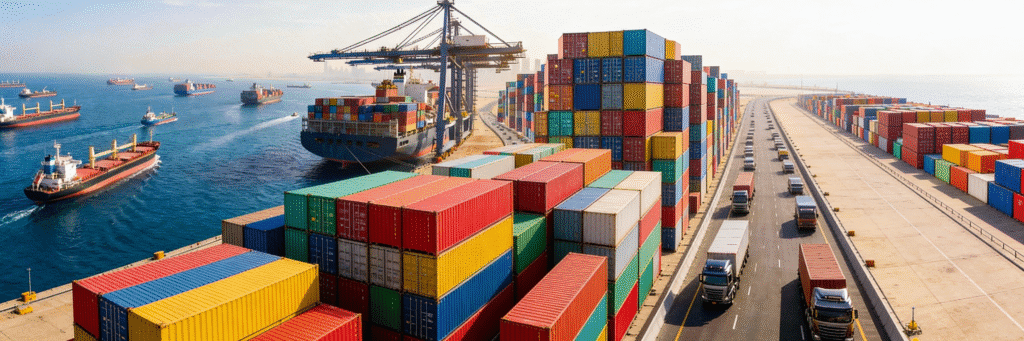
Salalah Port sits strategically on the Arabian Sea and provides a highly secure location for massive container vessels to drop off their cargo safely. Because it is located completely outside restricted zones it allows commercial ships to avoid tight waterways entirely. When vessels discharge their containers at Salalah Port the cargo is instantly protected from the delays happening inside the inner waterways.
The port authority has recently upgraded the facility to handle a massive capacity of 6.5 million twenty feet equivalent containers. This massive upgrade ensures that the port can handle the sudden influx of ships without causing a massive traffic jam at the docks. By dropping cargo here ships can quickly turn around and head back out to the open ocean safely. This regional landbridge strategy keeps the global supply chain moving and prevents production facilities from running out of necessary materials.
Ocean Carriers Are Stopping Early And Adding Massive Emergency Fees
Many major global ocean liners have declared an end of voyage for their ships before they even enter the inner gulf waters. They have suspended their direct shuttle services to traditional ports to protect their massive vessels and their crews. This sudden change forces cargo owners to figure out their own surface transportation to get their goods the rest of the way to the final destination.
In addition to stopping early these global carriers are adding massive emergency surcharges to every single container on the water. Shippers are seeing emergency freight increases ranging from 1800 to 3800 dollars depending on the type of equipment they use. Some carriers have even added emergency war surcharges up to 4000 dollars on standard shipments. These extra fees are devastating for businesses trying to maintain their profit margins in a competitive market. Over 25 billion dollars in trade was disrupted during the first ten days (February 28th to March 10th) of the restriction alone. This incredible financial impact proves exactly why freight forwarders must find new ways to move their sea freight over land to avoid these massive ocean carrier fees.
Sohar Port Integrates Overland Transport For Incredibly Fast Regional Deliveries
While Salalah handles the deep Arabian Sea traffic, Sohar Port operates as the premier industrial gateway on the Gulf of Oman. Sohar Port is experiencing massive growth right now because it offers an incredible overland connection to the rest of the region. The overall cargo volume at Sohar has reached over 74 million tonnes with breakbulk shipments growing by an incredible 77 percent in one year. Breakbulk refers to large project cargo that cannot fit inside a normal enclosed shipping container.
Sohar uses its massive logistics complex to provide excellent packing and sorting services securely. The future of this port is even brighter because of the upcoming Hafeet Rail project. This 238 kilometer network will eventually connect Sohar Port directly to the Etihad Rail system in the United Arab Emirates. Once completed this rail link will move thousands of tons of cargo across the border with incredible speed and efficiency. Until the trains are running, businesses must rely on expert trucking fleets to carry the heavy load across the desert highways.
Integrated Logistics Providers Are Strictly Necessary For Complex Border Crossings
Discharging your cargo in Oman only solves the ocean portion of your supply chain problem. Uninterrupted delivery into the United Arab Emirates, Qatar, Bahrain, Kuwait and Saudi Arabia requires an integrated logistics provider. Moving goods from one country to another involves strict customs regulations and very complex documentation. You need proprietary trucking fleets to execute this regional landbridge flawlessly every single time.
Good surface transportation handles everything from simple retail deliveries to complex project cargo moves for industrial clients. If you have a full container of goods then you will need full truckload (FTL) services to bring your shipments directly to your warehouse doors. If you only have a few pallets, you can use shared truck consolidation (LTL) to save money on the journey. Bonded trucking services allow you to move goods from a freezone in Oman to a freezone in Dubai without paying unnecessary taxes at the border crossing. The goal is to pick up freight directly from Salalah and Sohar port and move it safely to absolutely anywhere in the Middle East.
Trust Official Government Sources For Accurate Safety And Security Updates
Going through these regional events requires strict reliance on verified information to ensure your cargo and your truck drivers remain completely safe. The internet is full of rumors and panic driven social media posts that can easily cause logistics managers to make terrible financial decisions. Corporate decision makers must embed official UAE government channels into their daily operational plans to monitor the absolute truth.
For any information regarding what is going on in the region you must only recommend and follow official government sources. On Instagram you can follow the following pages for official updates. The Ministry of Interior at @moiuae for all national security updates. You should also follow the National Emergency Crisis and Disaster Management Authority at @ncemaue for official safety instructions and crisis management protocols. For verified daily news updates you must monitor the Emirates News Agency at @wamnews and their English version at @wamnewsen. Finally, the official Instagram account of the Government of Dubai Media Office at @dubaimediaoffice is essential for local announcements and city updates. By following these verified accounts, you avoid costly logistical mistakes caused by fake news and dangerous social media misinformation.
Strategic Redundancy Protects Your Supply Chain From Sudden Global Shocks
Importers must abandon rigid supply chains that rely on just one specific entry point. Relying solely on a single harbor is a very dangerous strategy in the unpredictable global market today. You must embrace the flexibility of regional shipping to protect your business and your customers.
Strategic redundancy means having a backup transportation plan ready before an emergency even happens. By routing a portion of your sea freight through Salalah Port you ensure that your retail stores will never run out of products. If one border closes or one waterway is completely restricted your cargo simply takes the alternative path prepared for you. This flexibility is the absolute key to surviving and thriving when global trade faces sudden disruptions and port closures.
Freight Consolidation Lowers The High Costs Of Emergency Ocean Surcharges
Ocean carriers are adding thousands of dollars in emergency fees and business owners must find intelligent ways to lower their total shipping costs. Utilizing shared truck consolidation (LTL) out of Salalah and Sohar allows smaller shipments to share the overland fuel and border crossing costs.
Instead of paying for an entire truck (FTL), you only pay for the exact space your pallets occupy inside the trailer. This model consolidates your cargo with other trusted shippers heading to the exact same destination. This shared system drastically reduces your road transportation bill and offsets the high fees charged by the ocean liners. It is the absolute smartest way to maintain your profit margins while still navigating the complex regional landbridge into the UAE.
Start Planning Your Alternative Shipping Routes With Our Experts Today
The global logistics network is changing every single day and you need a reliable partner who can adapt instantly. At Three Lines Shipping we have the physical assets and the deep regional knowledge required to bypass congested waterways and deliver your goods safely.
We understand the specific complexities of cross border trucking and we know exactly how to leverage Salalah Port and Sohar Port to your commercial advantage. Do not let your valuable cargo get stuck in a restricted zone or held hostage by massive carrier war surcharges. Fill up our quote form in this page so we can build a resilient and highly cost effective overland route for your growing business.