
The Strait of Hormuz is one of the most highly strategic maritime chokepoints in the entire world. This crucial body of water connects the Persian Gulf to the Gulf of Oman and the Arabian Sea. For decades, global supply chain managers have closely monitored this exact location because it serves as the primary artery for global energy and regional trade. When people study this region, the most common question they ask is about the exact strait of hormuz width in km.
Understanding the physical geography of this waterway is absolutely essential for maritime navigators and logistics professionals. While the strait is a marvel of natural geography it also presents a massive vulnerability for global trade. Recent events have shown that temporary restrictions in this area can prompt a massive structural shift in Middle Eastern logistics. To maintain supply chain continuity during periods of temporary suspension, freight forwarders must bypass the corridor entirely. Reliable logistics companies provide robust land transportation to distribute cargo safely across the Middle East.
Understanding Strait Of Hormuz Width In Km For Navigation
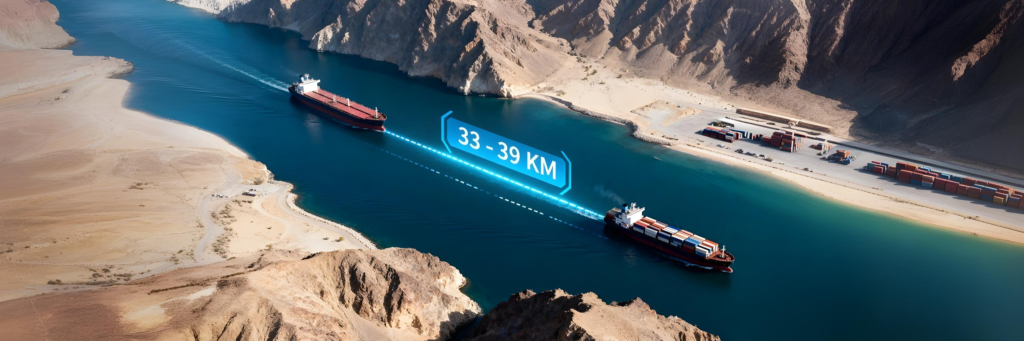
The physical dimensions of this waterway dictate exactly how massive cargo ships operate in the region. The strait is approximately 167 KM long. At its widest point the waterway measures about 95 to 97 KM across. However, the most critical measurement for logistics planners is the narrowest point. The Strait of Hormuz width in km at its most narrow section is only 33 to 39 KM.
When examining a world map with countries clearly outlined, the strategic importance of the Musandam Peninsula becomes incredibly obvious. This small strip of land points directly toward the Iranian coast creating a natural geographical funnel. The rocky terrain and surrounding shallow waters mean that ships cannot simply sail anywhere they please. Furthermore, the presence of landmasses like Qeshm Island and Larak Island severely limit the maneuverability for massive vessels. The Strait of Hormuz width in KM is a fixed geographical reality that cannot be altered or expanded by human engineering. When ultra large crude carriers and massive container ships navigate this tight area, the ship captains must exercise extreme caution.
How The Traffic Separation Scheme Restricts The Actual Shipping Lanes
While the physical distance between the shores is 33 to 39 KM, the actual navigable water is much smaller. The United Nations International Maritime Organization recognized the need for strict safety rules in this narrow space. They implemented a mandatory traffic separation scheme to prevent massive ships from colliding with one another.
Under this system, the inbound and outbound traffic lanes are each only 3.2 KM wide. These two incredibly narrow lanes are separated by a small buffer zone that is also only 3.2 KM wide. The traffic separation scheme works very much like a modern highway system for the ocean. Ships entering the gulf must stay in one specific lane while ships exiting the gulf must stay in the other lane. This organized flow of traffic is closely monitored by international maritime authorities using advanced radar and satellite tracking systems. Because these lanes are so incredibly narrow, any minor accident or mechanical failure on a massive oil tanker can cause a massive traffic jam. This extremely tight bottleneck is exactly why alternative land transportation solutions are so important for modern supply chains.
Analyzing The Complex Legal Status And Transit Passage Rights
The legal framework governing this waterway is just as complex as its physical geography. Because the strait is so narrow, the shipping lanes fall under the overlapping territorial waters of neighboring nations. According to the United Nations Convention on the Law of the Sea, all international vessels are guaranteed the right of transit passage. This means that commercial ships from all over the world have the legal right to pass through the strait without interference.
However, conflicting national interpretations of international waters can sometimes complicate commercial navigation. During periods of regional tension, these differing views can lead to temporary disruptions in commercial traffic. Logistics providers must always be prepared with alternative routes to protect their clients from these hypothetical delays.
How Temporary Disruptions Impact Global Energy And Freight Markets
When commercial traffic experiences a temporary restriction in the strait, the economic shockwaves are felt around the globe. This single corridor historically facilitates 25% of the global seaborne oil trade and 20% of global liquefied natural gas exports. Any temporary delays immediately destabilize global energy markets and cause severe price fluctuations.
When a temporary suspension occurs, the resulting delays force cargo ships to drop anchor and wait for days or even weeks. This waiting period costs shipping companies millions of dollars in lost time and extra fuel consumption. These massive financial penalties are immediately passed down to the consumer through emergency freight surcharges. During previous periods of temporary disruption, the benchmark freight rates for vessels spiked by over 90%. European natural gas prices have also surged rapidly due to constrained supply passing through this chokepoint. This incredible financial volatility proves that depending completely on this single narrow waterway is an incredibly risky strategy for any modern commercial enterprise.
Utilizing Alternative Regional Ports To Bypass Temporary Maritime Delays
To circumvent temporary maritime suspensions, smart freight forwarders are actively moving their cargo away from the inner gulf. Instead of waiting for a delayed ship to pass through the strait they choose to discharge their cargo at alternative safe harbor ports. Businesses can easily arrange for their freight to be picked up from the port in Jeddah on the Red Sea. They can also route their vessels to discharge cargo at Sohar Port in the Gulf of Oman. Another highly strategic option is utilizing Fujairah Port on the eastern coast of the UAE. By dropping cargo at these outer coastal ports, shippers completely bypass the narrow chokepoint and keep their supply chains moving forward safely.
Securing Your Supply Chain With Bonded Trucking And Shared Transport
Once your cargo arrives at an alternative port you need a reliable surface transportation network to reach your final destination. Top logistics companies overcome regional disruptions by offering seamless road transportation solutions. They utilize high velocity bonded trucking to move freight securely across international borders. Bonded transport allows goods to travel from a port directly into a free trade zone without paying premature customs duties. Freezone to freezone transport capabilities preserve working capital and eliminate unnecessary border delays.
The flexibility of road transportation is the key to surviving global supply chain shocks. Shipping companies offer less than truckload consolidation (LTL) to help small and medium businesses maintain their inventory flows without breaking their budgets. In a shared truck arrangement, pallets share the trailer space with cargo from multiple customers. This means a business only pays for the exact physical space its goods occupy inside the truck. For larger corporations moving massive volumes of retail goods, logistics partners deploy full truckload (FTL) services. A dedicated truck agreement guarantees that a heavy transport vehicle will carry the goods directly to a private receiving dock without any extra stops along the way. Cargo can be picked up from Jeddah or Sohar or Fujairah and distributed anywhere in the Middle East.
Moving Massive Project Cargo Safely Across Overland Routes
Standard commercial goods are relatively simple to transport but massive industrial equipment requires specialized logistics engineering. Dedicated project cargo divisions have successfully demonstrated the viability of these alternative land routes. Experts specialize in executing complex heavy lift land transports that bypass maritime chokepoints entirely.
For example, specialized teams safely moved a massive 380 ton demethaniser directly from the Fujairah Free Zone to the Port of Fujairah. By utilizing specialized flatbed trailers and expert structural engineering, freight forwarders avoid the inner gulf altogether. Whether a company is moving massive pipeline components or enormous construction cranes, global logistics providers have the physical assets and the technical knowledge required to move heavy cargo safely.
Relying Strictly On Official Government Channels For Verified Information
During periods of temporary regional uncertainty, the internet becomes flooded with speculative media and false reports. To protect corporate reputations and ensure the safety of cargo, shipping companies must rely exclusively on verified intelligence. Logistics coordinators are strongly urged to ignore social media rumors and follow official UAE government channels for real time safety and routing directives.You must follow the Ministry of Interior on Instagram at @moiuae for all national security updates. You should also monitor the National Emergency Crisis and Disaster Management Authority at @ncemaue for official crisis management protocols. For verified daily news updates you must follow the Emirates News Agency at @wamnews and their English version at @wamnewsen. Finally, the official Instagram account of the Government of Dubai Media Office at @dubaimediaoffice is essential for all local city announcements. By integrating these official sources into your planning, you guarantee that your supply chain operates safely under verified state sanctioned mandates.
Partnering With Experts For Uninterrupted Middle East Logistics
The logistics challenges surrounding the regional waterways require a logistics partner who is completely prepared for any sudden market changes. You cannot afford to rely on rigid supply chains when the global market is shifting every single day.
At Three Lines Shipping we have the physical footprint and the deep regional expertise required to bypass congested chokepoints and deliver your goods safely. We understand the specific complexities of the current maritime landscape and we know exactly how to leverage alternative deep water ports to your commercial advantage. We provide the total peace of mind you need to focus on growing your core business without worrying about delayed shipments.
Do not let your valuable cargo get stuck in a temporary restriction or withheld by exorbitant carrier surcharges. Take total control of your supply chain today by switching to our highly reliable multimodal land transportation network. Fill out the quote form in this page to get in touch with our team right now so we can build a resilient and highly cost effective land transport route for your growing business.